


If you need to brief an architect in Kenya, the quality of what you hand over decides the quality of what comes back. A vague brief produces vague drawings, then a long run of revisions that you pay for. A clear one saves weeks and puts the design effort where it counts.
Most articles about hiring architects give you a list of firms. This one tells you what to bring to the first meeting and what happens next, using the process we follow at Trioscape Space Planning Ltd. We’ve been practising since 1994, and the firms we work with range from private developers to dioceses and public bodies.
What a good brief contains
Our process begins with inception, where we receive, appraise and report on your requirements. These six items are the ones we ask about, and the ones that most affect everything after.
| Brief item | What to tell your architect | Why it matters |
|---|---|---|
| Client’s brief | Purpose, users, activities and must-have spaces | Sets the space schedule |
| The site, rights and constraints | Title, boundaries, access, neighbours, restrictions | Decides what can legally and physically be built |
| Budgetary constraints | A realistic range, and who is funding it | Keeps design and cost aligned |
| Need for consultants | Whether you’ve appointed engineers or need help | Avoids gaps in structural and services design |
| Project programme | Target dates and any fixed deadlines | Shapes the phasing and procurement |
| Method of contracting | Whether you prefer one contractor or several | Affects tender documents and supervision |

How an architect’s service is split
Knowing the stages helps you plan your own time and cash. Our process divides the total service as shown below.
| Stage | Share of total service | What happens |
|---|---|---|
| Inception | 5% | We review your brief, site, budget and programme |
| Concept and viability | 15% | Initial design, space planning and cost review |
| Design and development | 20% | Design is developed with consultants and statutory authorities |
| Local authority drawings | 20% | Technical documents prepared and submitted for approval |
| Construction documentation and tenders | 10% | Tender documents, offers evaluated, contract prepared |
| Construction | 27% | Contract administration and inspection of the works |
| Close out | 3% | As-built drawings and completion certificates |
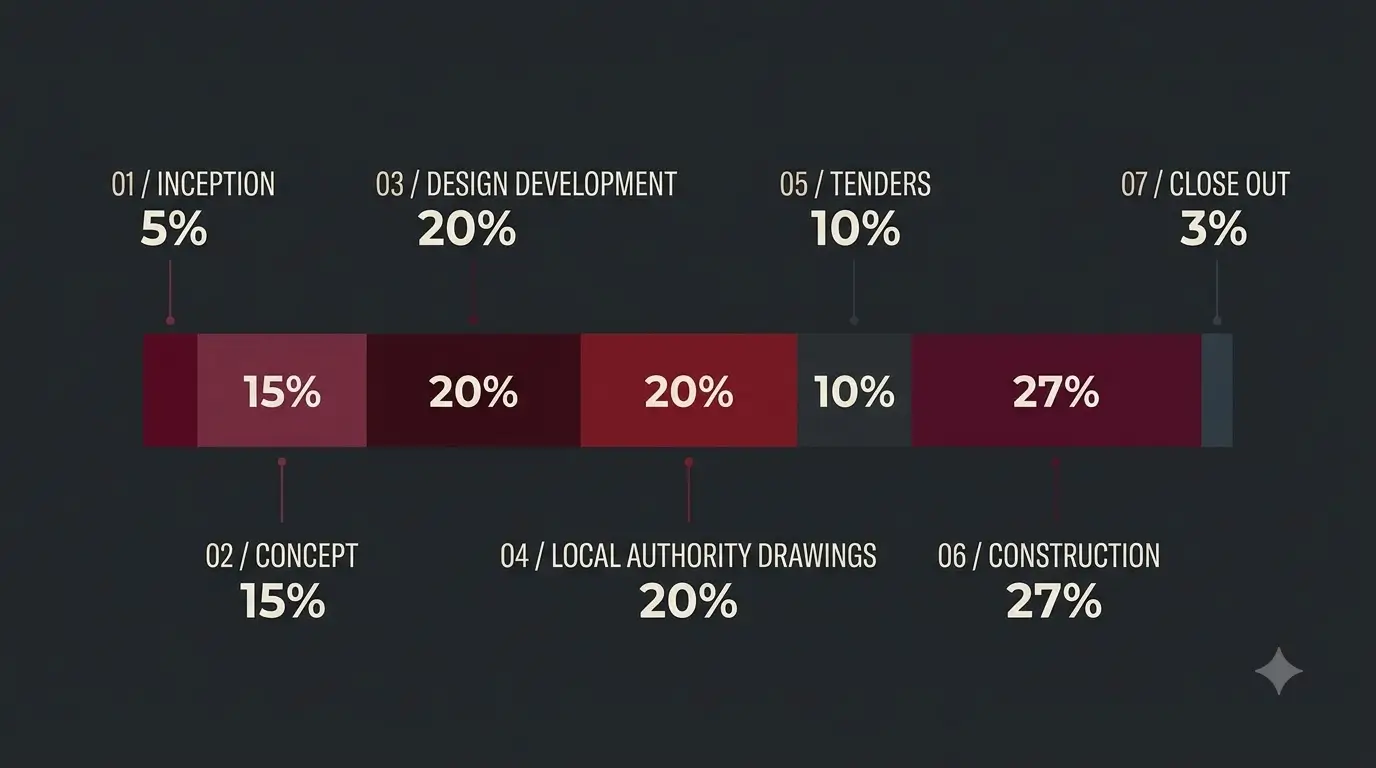
The surprise for many clients is how much of the service lies after approval. More than a quarter sits in construction. That is why project management and supervision matters as much as the drawings.
Who we brief with, and what they usually need
Our clients tend to fall into three groups. Institutions such as the Archdiocese of Nairobi, Tangaza University College, the Africa Alliance of YMCA and the Judiciary need clear governance, phased delivery and long-term performance. We’ve worked with over 15 major institutions. Private developers want rentable area, cost control and speed, as at Avenue 5 Rose Avenue. Churches and community groups need large gathering spaces on tight budgets, as at the Village Shrine of Mary in Subukia, which serves over 5,000 worshippers.
Each group needs a slightly different brief. Institutions should add decision-makers and approval routes. Developers should add target tenants and yield. Community clients should add how funds will be raised, because that shapes phasing.
Common mistakes when briefing
Four turn up again and again. People give a style instead of a function. They share a budget late, so the design has to be redone. They skip site documents, so approvals stall. And they treat the brief as fixed, when a good architect will test it with feasibility studies and alternative layouts.
That last one matters. We present design alternatives so you can choose on cost, aesthetics and site conditions, instead of discovering the trade-offs after the contractor is on site.
What to ask the architect in return
A brief goes both ways. Ask for the registration numbers of the firm and of the architects who will sign the drawings. Ask who runs the project day to day, how fees are structured, and who attends site. We explain why this check matters in our post on registered architectural firms in Kenya, and our guide to choosing architects in Nairobi gives the longer checklist.
Where to go next
Once your brief is clear, the next questions are specific. Considering a basement? Read about underground parking in Nairobi. Planning a campus? See CBC school design in Kenya. Weighing a retail building? Start with shops in a Nairobi CBD commercial building. Funding in stages? Read how to phase a large building project in Kenya.
Frequently asked questions
What should I prepare before meeting an architect?
Bring your purpose, site documents, a budget range, target dates and your preferred way of contracting. Even a rough version helps.
Do I need a full brief before I hire?
No. A feasibility study can sharpen a rough brief, and we begin with that in many projects.
How long does the design stage take?
It depends on the size and approvals involved. Our process separates concept, development and local authority drawings so you can see progress at each step.
Can I change the brief later?
You can, but changes after design development cost more. Settle the big decisions early.
What does an architect do during construction?
We administer the contract, hand the site to the contractor, issue documents and inspect the works. Read about our architecture and design service.
Knowing how to brief an architect in Kenya saves time and money on every project, from a first feasibility study to a final handover. Bring clear information, expect to test it, and choose a firm that explains its process before you sign.
Ready to brief an architect in Kenya?
Trioscape Space Planning Ltd can take your rough brief and turn it into a clear design direction. Call 020-2668216 or book a consultation.