
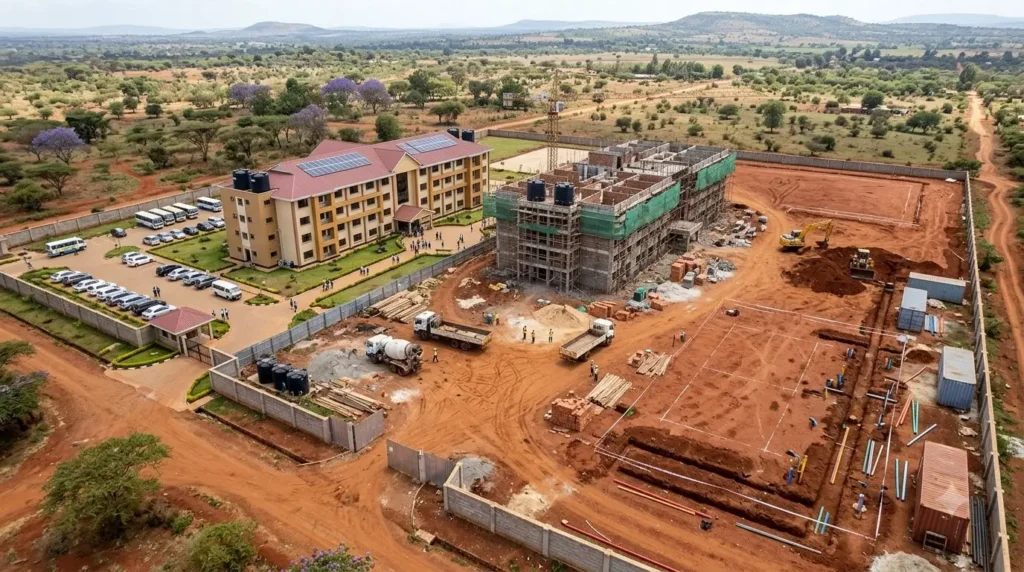
Most people who ask us to phase a large building project in Kenya aren’t being cautious. They’re being realistic. A diocese raises funds in stages, a school grows with its roll, a developer sells the first units before starting the second block. Phasing is how many big projects here actually get built.
The risk is that phase one gets designed as a small project, and phase two discovers that the drains, the car park or the staircase are in the wrong place. This guide shows how to phase without paying twice.
Why developers choose phased construction
The reasons are usually money and risk. Spreading spend over time makes funding easier, and each phase teaches you something before the next one starts. Phasing also lets a building start earning, serving or teaching sooner.
| Single phase | Phased | |
|---|---|---|
| Funding | Needs the full budget upfront | Spreads spend over time |
| Risk | One large commitment | Smaller commitments, with room to adjust |
| Disruption | One construction period | Longer period of site activity beside occupied buildings |
| Rework | Low | High if there is no master plan |
| Control | One contractor, one programme | Needs tight coordination between phases |
Draw the master plan before phase one
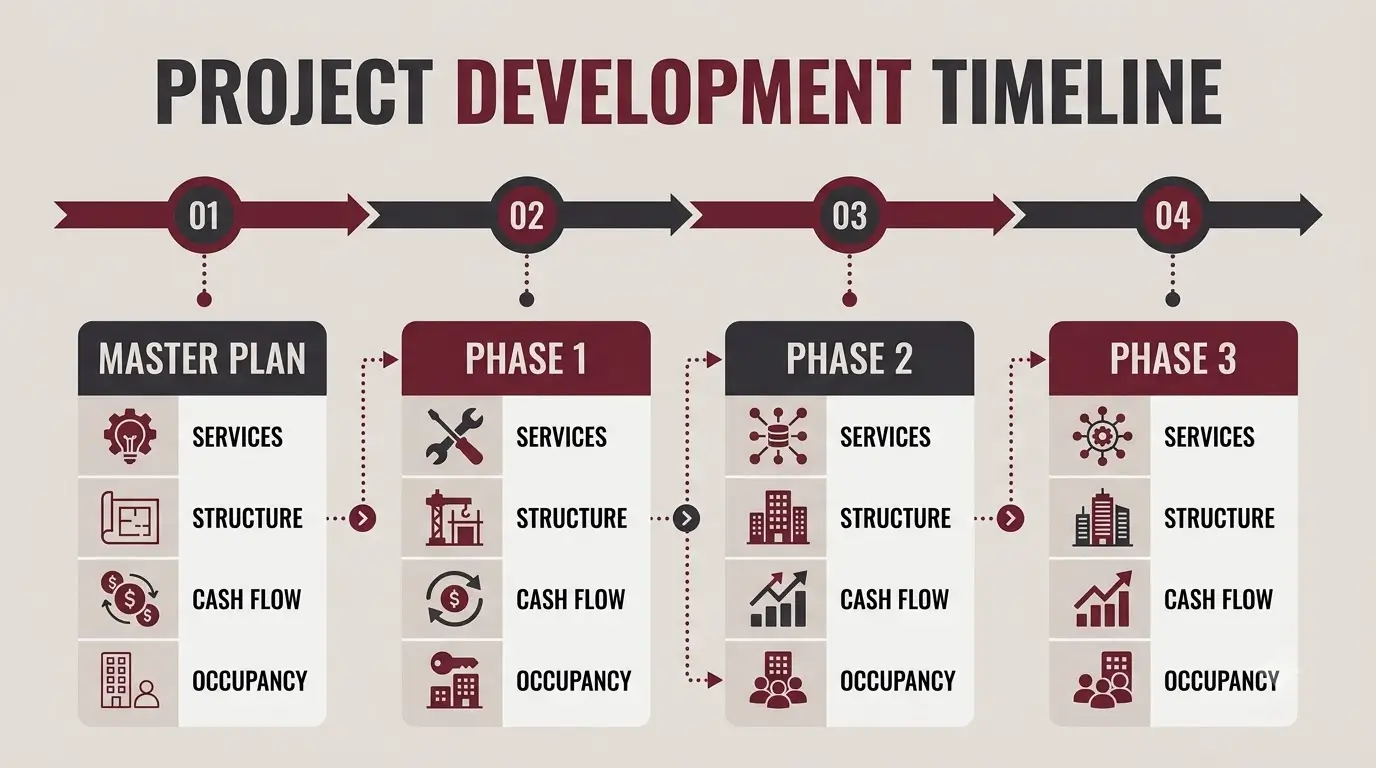
You can build in pieces, but you must design as a whole. The proposed St Monica Primary and Junior School in Kiambu County is a good example. It is a master planned development with an administration and tuition block, kitchen, dining, dormitories, a health centre and sporting facilities. Nobody builds all that on day one, but everyone needs to know where each part goes.
We start with feasibility studies to test what the site and the budget can support, then fix the phase boundaries. Our projects list has a dedicated master planning category for exactly this work.
Budget and cash flow
Each phase carries a share of common costs: site works, access roads, drainage and main services. Budget for that share, or phase one will look cheap and phase two will look like a surprise. Put the part that earns or serves first, and keep a contingency for each phase, not just the whole job.
Our project management and supervision team reviews costs and programme against the design at each stage, so the numbers you approved in phase one still make sense in phase three.
Structural and services provisions for later phases
This is where phasing succeeds or fails. The first building has to be ready for what comes next.
| Provision | Why it prevents rework |
|---|---|
| Foundations and columns sized for added floors | Avoids strengthening a building that’s already occupied |
| Stair and lift cores in their final position | Lets later floors or wings connect without demolition |
| Service risers and sleeves left in place | Keeps pipes and cables from being cut through finished slabs |
| Main utilities sized for the full build | Prevents replacing undersized mains in phase two |
| Knock-out panels at joining walls | Makes the connection to a later wing a small job |
At St Catherine of Alexandria Catholic Church in South C, the design includes a basement level planned for future car parking. The church functions today, and the parish can add parking later without touching the sanctuary above.
Keeping operations running during construction
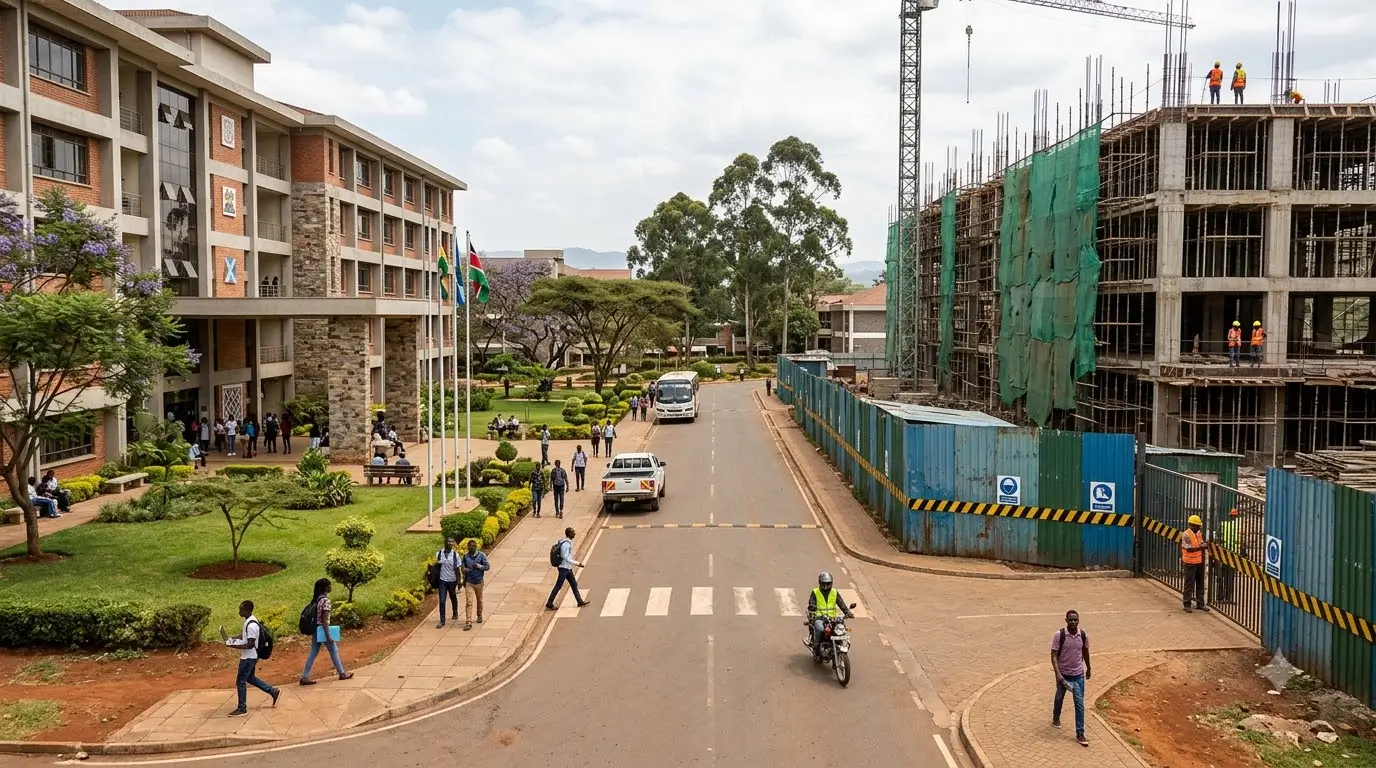
Schools, churches and offices rarely close for building work. We plan separate construction access, hoarding and safe walkways so learners, worshippers or tenants never share a route with trucks. Noisy work gets scheduled around school terms and services, and our on-site supervision keeps contractors to the agreed boundaries.
What to build first, by project type
| Project type | Sensible first phase | Watch out for |
|---|---|---|
| Schools | Classrooms, administration and core services | Leaving labs, kitchens and sports for later with no space reserved |
| Churches and community facilities | Main worship space and essential support rooms | Forgetting parking, drainage and expansion routes |
| Residential developments | First block plus shared infrastructure | Underbuilt roads, drains and utilities |
| Commercial and mixed-use | Core, lettable floors and parking | Cores and structure that block upper floors later |
The Village Shrine of Mary in Subukia, designed for over 5,000 worshippers across three levels built into the slope, is the kind of project that rewards early planning of levels and access. At the scale of the Civil Servants Housing project on Park Road, with 1,800 residential units, a master plan is the only way to keep a development coherent.
When phasing makes financial sense
Phasing makes sense when funding or demand arrives in stages and the master plan is complete. It stops making sense when phases are so small that each one needs a full set-up cost, or when tying a later phase into the first will cost more than building both together. If you’re not sure, a feasibility study will tell you.
Frequently asked questions
Can I start building before the master plan is done?
You can, but it is risky. Without a master plan, phase one decisions on drainage, access and structure can block or inflate later phases.
Do all phases need approval upfront?
That depends on the scheme and the county. We prepare local authority drawings as a distinct stage, and we will advise on how to submit your phases.
How do I avoid demolition between phases?
Design the whole building first, then place cores, risers, services and structural capacity where phase two will need them.
Does phasing cost more overall?
It can, because of repeated set-up and longer site activity. It reduces upfront capital and risk, so the right choice depends on your funding.
Who manages a phased project?
A single team that carries the design intent across phases is ideal. See our architecture and design service.
To phase a large building project in Kenya without paying twice, design the whole, budget each phase honestly and build the provisions for later phases into the first one.
Need to phase a large building project in Kenya?
Trioscape Space Planning Ltd can prepare your master plan and phase strategy before the first brick is laid. Call 020-2668216 or book a consultation.