

“`
Ask a Kenyan developer what went wrong on their last build and the answer is rarely the design. It’s usually what happened after the drawings were approved: a contractor cutting corners nobody caught in time, a tender awarded on price alone, or months lost to work that had to be redone. That gap between “approved design” and “building that actually matches it” is exactly what construction project management in Kenya is meant to close.
It’s also one of the most misunderstood services in the industry. Some clients assume it’s just “someone checking in occasionally.” Others confuse it with the contractor’s own site management. Neither is quite right, and the confusion is expensive. This post breaks down what construction project management in Kenya actually involves, using the process Trioscape Space Planning has run since 1994.
What Project Management Actually Covers
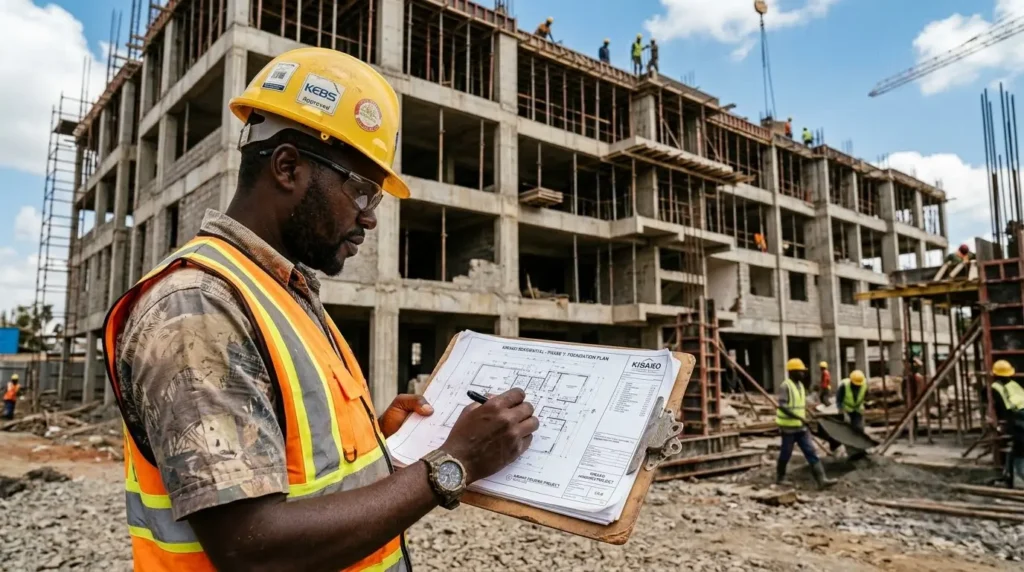
Project management and supervision sits above the contractor, not alongside them. Trioscape describes it simply: using hands-on experience to manage the construction process, including tender action and on-site supervision, to ensure quality from start to finish. In practice, that breaks into a few distinct jobs:
| Phase | What the project manager does |
|---|---|
| Tender action | Prepares tender documentation, evaluates contractor offers, and recommends the contract award |
| Contract administration | Hands over the site to the contractor and issues the construction documentation they’ll build from |
| Site supervision | Inspects the works for conformity to the approved contract documentation |
| Sub-contract coordination | Initiates and checks sub-contractor design and documentation where required |
| Practical completion | Issues the certificate of practical completion and assists the client in obtaining the occupation certificate |
| Close-out | Collects as-built drawings and the contractual undertakings needed to formally hand the building over |
Two of those phases, construction supervision and close-out, together make up the largest share of a full architectural service. That’s not an accident. Design is finished relatively early in a project’s life; supervision runs for the entire build.
Why “Checking In” Isn’t the Same as Supervision
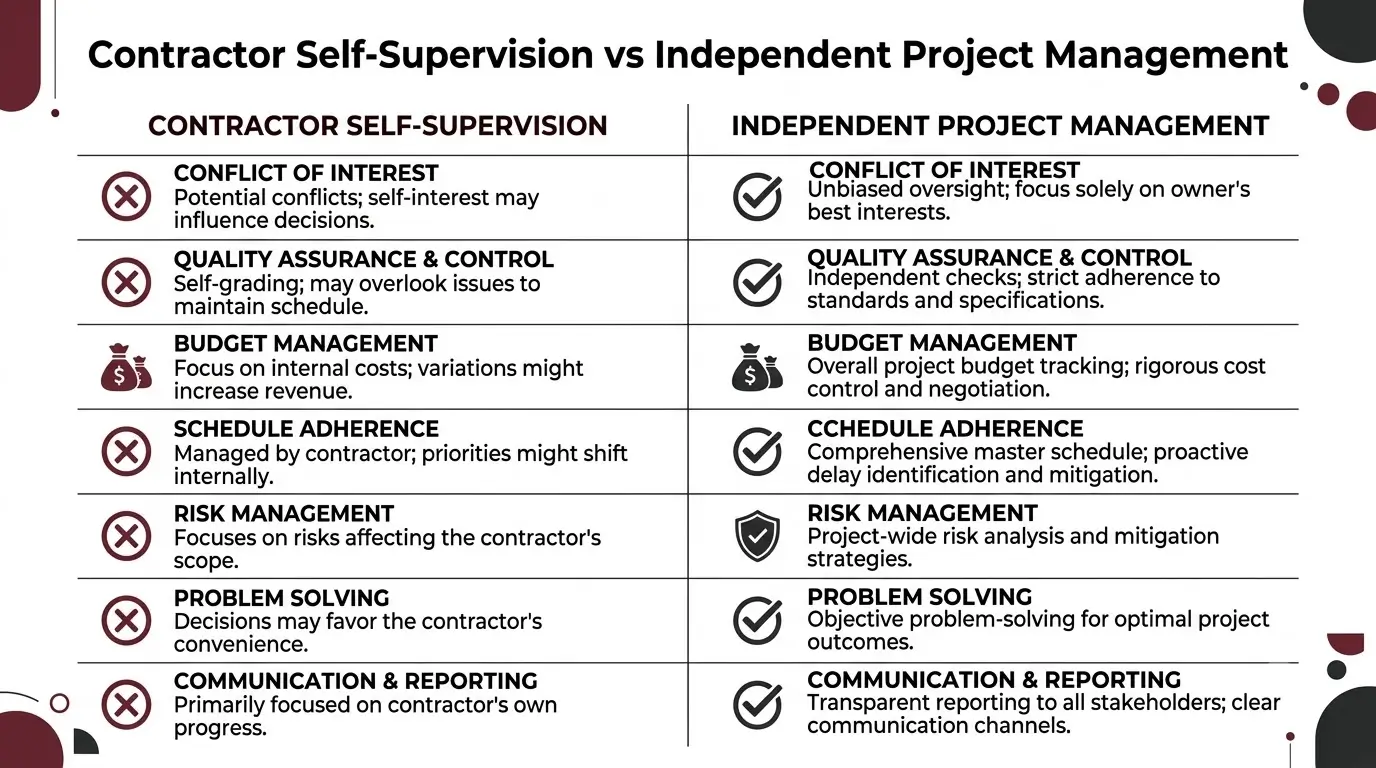
Here’s where a lot of budgets quietly leak. A contractor who’s also self-supervising has every incentive to move fast and few incentives to flag their own mistakes. Independent project management changes that dynamic, because the person checking the work isn’t the person who built it.
| Factor | Contractor self-supervision | Independent project management |
|---|---|---|
| Who checks the work | The same team that built it | A separate, independent party |
| Tender process | Often skipped or informal | Structured evaluation of multiple offers |
| Design conformity | Interpreted on site, case by case | Checked against the approved drawings |
| Handover documentation | Often incomplete or delayed | As-built drawings and certificates prepared as part of close-out |
What This Looks Like on Real Projects
Large institutional projects make the case clearly. A six-storey administration block for the Kenya Judicial Academy, a five-storey library for Tangaza University College built to hold roughly 1,300 students and 1,700 staff, or the underground parking silo at Holy Family Basilica in Nairobi CBD all involve multiple contractors, tight approval timelines, and clients who need honest, independent progress reporting, not just a finished building at the end. Read more about Trioscape’s project portfolio across these sectors.
Questions to Ask a Firm Offering Project Management
- Is tender evaluation independent, or does the firm have a financial relationship with any bidding contractor?
- How often are site inspections carried out, and is there written reporting after each one?
- Who issues the certificate of practical completion, and what does the client need to obtain occupation approval?
- Are as-built drawings and handover documents part of the service, or billed separately at the end?
The Bottom Line
Construction project management in Kenya is what stands between an approved design and a building that actually matches it. Tender action, independent site supervision, and proper close-out documentation aren’t optional extras, they’re what stop a good design from being undone during construction.
Need Construction Project Management in Kenya?
Talk to Trioscape about tender action, independent site supervision, and close-out for your next project.
See how this fits alongside Trioscape’s architectural design services, or read about how architect fees in Kenya are structured stage by stage.
FAQs
Is project management the same as architecture?
No. Architecture is about design, drawings and approvals. Project management and supervision is about making sure what gets built on site actually matches those drawings, on schedule and within budget.
Do I need project management if I already have a contractor?
A contractor manages their own crew and schedule. Project management sits above that, checking the contractor’s work against the approved design, running the tender process fairly, and giving the client an independent view of progress and cost.
What does site supervision actually cover?
Regular site inspections against the approved drawings, checking materials and workmanship, administering the building contract, and issuing the certificates needed to move the project toward completion and occupation.
When should project management start on a project?
Ideally before construction begins, since the tender stage (evaluating contractor offers and awarding the building contract) is part of project management, not something that happens after a contractor is already on site.
“`